

Gaza - Connecting Worlds
The Gaza Strip, today a narrow stretch only 41 kilometers (24 miles) long and between 6 and 12 kilometers (4 to 7.5 miles) wide, was once a much larger area commanding power and influence.
In addition to trade from different continents, its fertile coastal plain earned it the name “the breadbasket of Palestine.” Its bustling markets, customs houses, mosques, churches and synagogues made it one of the wealthiest, scholarly and most dynamic cities of the ancient world.
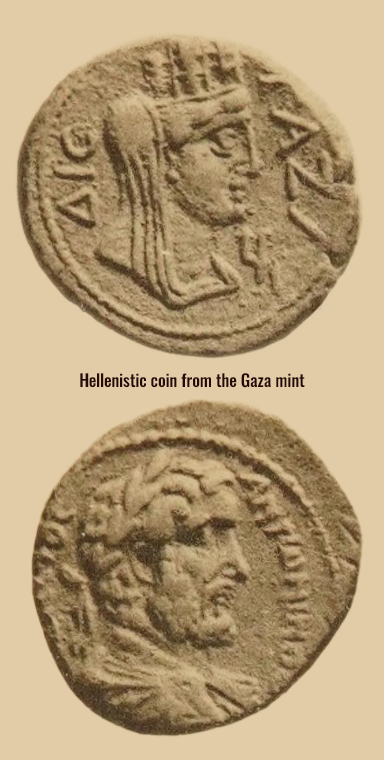
So powerful was Gaza that it minted its own currency, underscoring its role as a commercial gateway between worlds.
In 332 BCE, Alexander the Great made it a central objective to conquer Gaza in his quest to build a vast empire, which would extend from Europe to Asia.
But Gaza did not fall easily. It held out for four months—the longest siege of Alexander’s campaigns—bringing the most powerful army to a halt.
Alexander valued Gaza not only for its strategic position and wealth, but as a thriving intellectual hub where philosophy, religion, poetry, and scientific thought converged. In nearby Alexandria—the Egyptian coastal capital he founded—he built the ancient world’s greatest library, creating a living network of scholars and ideas flowing between Gaza, Athens, and Alexandria.
Long before Alexander conquered Gaza, its name appears on maps as Gaza. And that name means strength. In Arabic, Ghazzah (غزة), and in Hebrew, Azzah (עַזָּה), both mean strength or fortress. The name is also a metaphor for the strength of its people. Through millennia of conquest and empires — from Egyptians, Persians, Greeks, and Romans to Byzantines, Mamluks, Ottomans and British — the city’s identity was always one of strength.
Grand Architecture & Interwoven Faiths
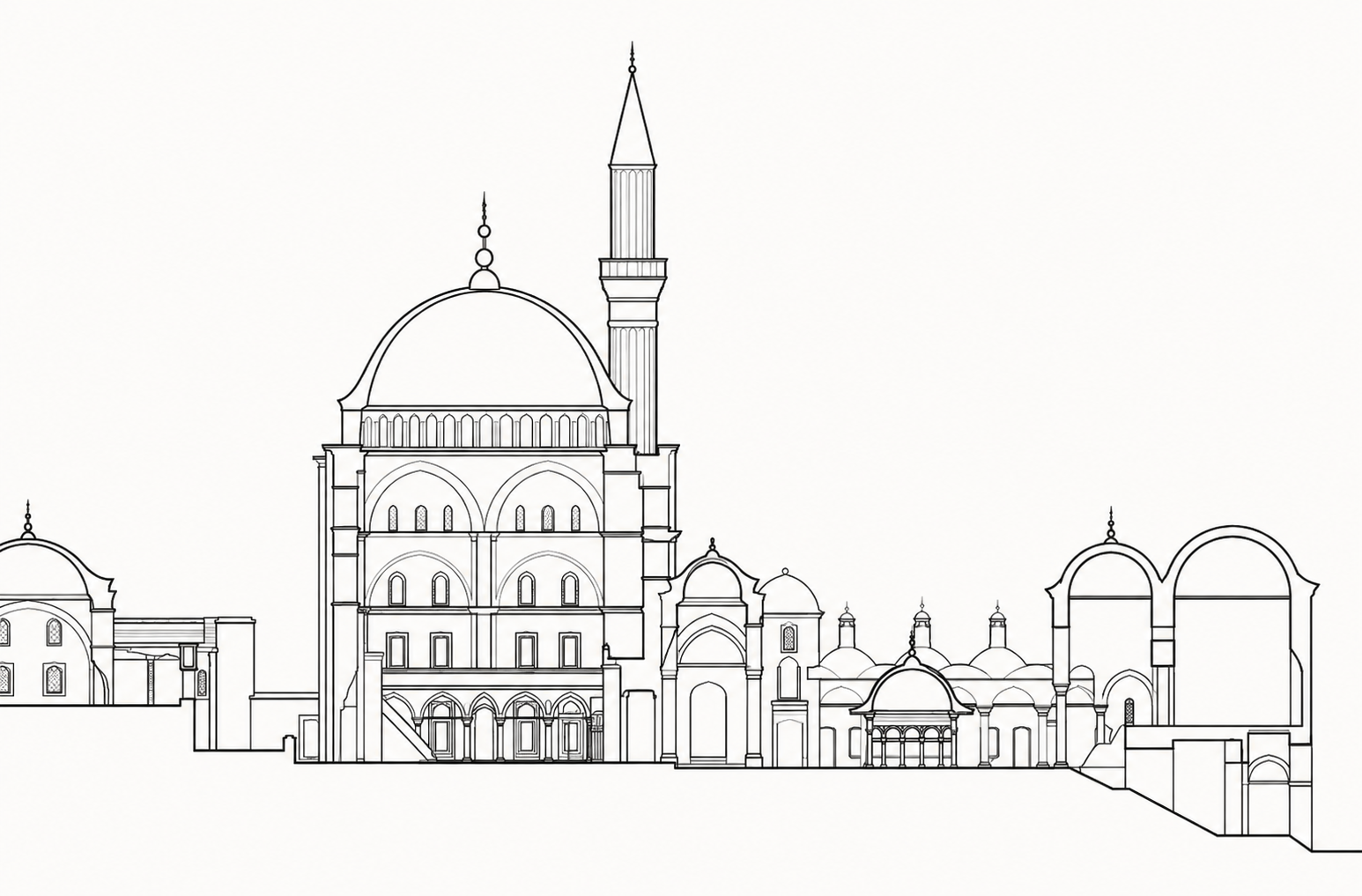
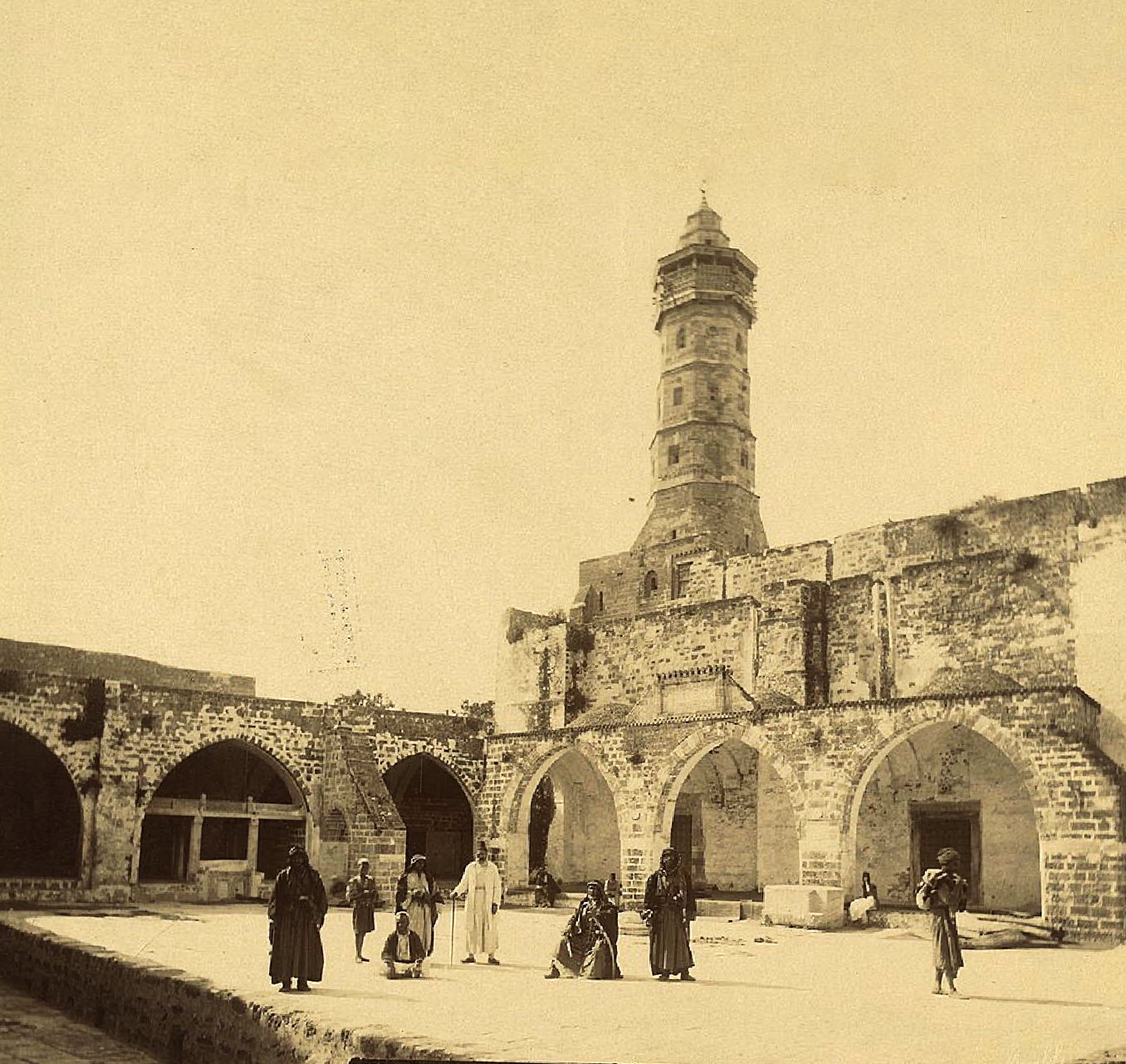
Gaza’s buildings revealed its place as a center of civilization, where religions converged and ideas moved freely.
At the heart of the city rose Gaza’s most commanding monument: the Great Mosque of al-Omari, originally a 5th-century church. Its expansive interior served as a gathering point for scholars, judges, travelers, and citizens.
Just steps away stood the Pasha’s Palace (Qasr al-Basha), a Mamluk-era residence with vaulted halls. Over time, it became a museum preserving Gaza’s artifacts from the Bronze Age, Canaanite, Greek, Roman, Byzantine, and Islamic eras — a reminder of Gaza’s long and continuous history.
Gaza’s deep Christian heritage is embodied in the 5th century Church of Saint Porphyrius, Gaza and one of the world’s oldest continuous Christian community. Next to it, in 1882 the Anglican Church established Al-Ahli Arab Hospital, the first modern hospital in Gaza.
The city’s Jewish presence appears most vividly in the 6th-century synagogue mosaics — intricate floors displaying Hebrew inscriptions, geometric motifs, and a portrait of King David playing the lyre.
Together, Gaza’s mosques, churches, synagogues, grand buildings and palaces formed more than an urban scape — they were a hub where Muslims, Christians, and Jews lived, traded, studied, and throughout history defended the city together, a city alive speaking Aramaic, Hebrew, Arabic and Greek.
Gaza flourished until the opening of the Suez Canal in 1869, when global shipping routes shifted through to the canal and the importance of overland trade declined. Though no longer at the center of these routes, Gaza was remained a thriving coastal city—the “breadbasket of Palestine,” a holiday destination, and home to families whose roots stretched back centuries.
Gaza Will Rise Again
Then in 1948, everything changed.
When the State of Israel was declared, taking over half the land mass of Palestine, Gaza was flooded with refugees. Israeli forces violently expelled some 750,000 Palestinians from their homes, businesses and farms. The once-thriving coastal city became one of the most crowded and impoverished places on earth.
But Gaza’s legacy lives in its people.
For centuries, Gaza has endured conquest—and each time, it has stood strong.
Gaza is a place of strength.
And it will rise again.
Much of the historical information is drawn from the work of Dr. Abaher El-Sakka, in his book: L’Histoire Sociale de Gaza Sous L’occupation Britannique (1917–1948). Dr. El-Sakka is the Dean of Arts of Palestine’s oldest university, Birzeit University.